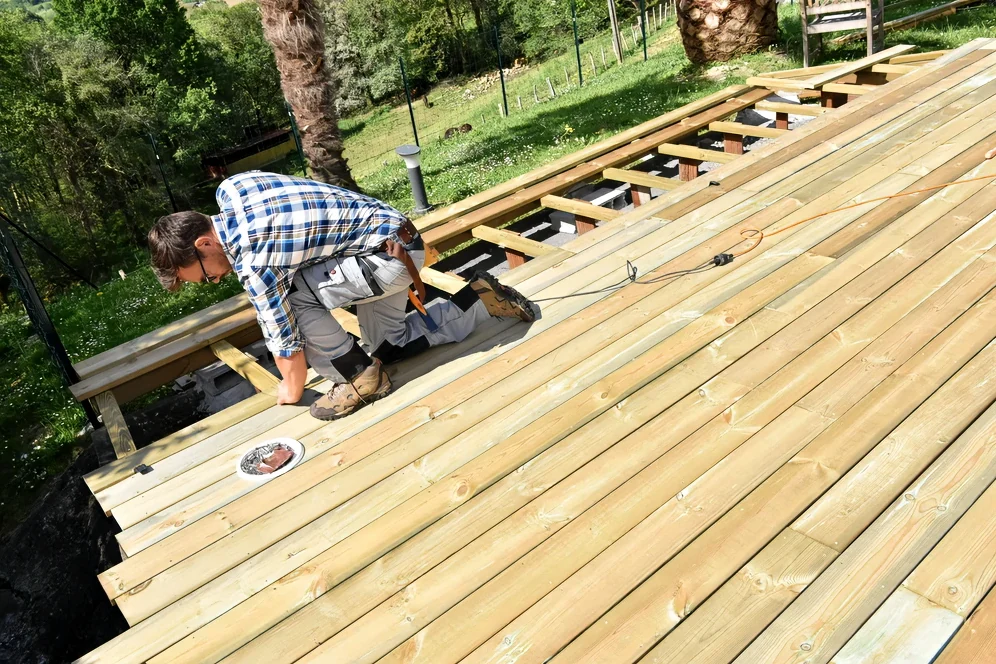
What is Deck Repair and how does it work?
Deck repair means fixing rot, loose boards, wobbly railings, or failing fasteners on an existing wood or composite deck. It is not a full rebuild, but targeted replacement of damaged parts to make the deck safe and solid again.
Most Birmingham decks are pressure-treated pine, which lasts about 10 to 15 years before rot or splitting shows up. Composite decks hold up longer but still get soft spots from trapped moisture or impact damage. Repair work focuses on the specific areas that have failed, not the whole structure.
A good repair starts with a careful inspection. The contractor walks every board, checks every post base for rot, and probes the ledger board where the deck meets the house. That ledger connection is the most common hidden failure point on Birmingham decks, especially on homes built in the 1990s and early 2000s.
Once the damage is mapped, the contractor decides what to replace. A single rotted board can often be pried up and swapped without touching the neighbors. A rotted post base might need a concrete repair or a new post altogether. Railings that wobble usually need new brackets or replacement of the rotten picket ends.
The actual work takes one to three days for most repairs. A full deck replacement is a different job entirely. If more than 30 percent of the deck is rotten, it is usually cheaper to tear it off and start fresh. A good contractor will tell you that upfront rather than patching a deck that is already gone.
Birmingham's humidity and afternoon thunderstorms speed up rot on any deck that does not have good airflow underneath. Decks built close to the ground with no gap for drainage are the ones that fail fastest. A repair that adds proper ventilation can double the life of the remaining sound wood.
How Deck Repair works, step by step
A deck repair starts with a free on-site inspection, then the contractor gives you a written scope of work and a price range. Once you approve, they order materials, schedule the job, and complete the repair in one to three days.
Step one is the inspection. The contractor checks the ledger board by removing a few screws or nails and looking for rot behind the rim joist. They also check the post bases for ground contact rot, which is common on decks built on concrete piers without a metal standoff. They will poke each joist end with a screwdriver to find soft spots you cannot see from above.
Step two is the estimate. The contractor writes down exactly which boards, posts, or railings need replacing and what materials they will use. They should also note any code upgrades needed, like adding joist hangers or replacing old lag screws with through-bolts at the ledger. A written estimate protects both of you.
Step three is material ordering. Pressure-treated lumber needs to be the same species and treatment level as the original to avoid warping or mismatched color. Composite boards have to match the exact brand and color line, which can be hard if the deck is more than five years old. The contractor should show you the material before they start.
Step four is the actual repair. The crew cuts out the damaged section and replaces it. For a single board, they drive the new one in with hidden fasteners or face screws, depending on what is already there. For a post, they may need to jack up the deck slightly to slide the new post under the beam. Railings get newels set in galvanized brackets bolted to the joists.
Step five is the final walk. The contractor shows you what was replaced, explains why the old part failed, and tells you what to watch for in the future. They should also clean up all debris and old lumber. A reputable company will not leave you with a pile of rotten wood in your yard.
Why Deck Repair matters for your home
A rotting deck is a safety hazard and a liability. A wobbly railing can send someone off the edge. A failed ledger can pull the whole deck away from the house. Fixing it early keeps your family safe and avoids a much more expensive rebuild later.
Birmingham gets about 54 inches of rain a year, which is a lot for any deck. Water sits on flat surfaces and soaks into end grain. That is why the ends of joists and the tops of posts rot first. Once rot reaches the structural connection points, the deck can fail without warning.
The ledger board is where the deck attaches to the house. If that rots, the deck can separate from the wall and collapse. That is not a theoretical risk. It happens every year in Birmingham, usually on decks that were built before the building code required flashing and through-bolts at the ledger.
Insurance companies look at decks the same way they look at roofs. A neglected deck is a claim waiting to happen. If someone gets hurt on a loose railing or a rotten step, you are on the hook. A small repair now costs a fraction of what a single trip to the ER would cost.
A well-maintained deck also adds to your home's value when you sell. A real estate agent will flag a rotten deck as a defect, and buyers will negotiate the repair cost off the sale price. Getting it fixed before listing means you control the work and the cost, not the buyer's inspector.
The other reason to fix it now is that rot spreads. A soft spot the size of a quarter this spring can be a hole the size of your fist by fall. The longer you wait, the more boards, joists, and posts get pulled into the repair. That is how a two-board repair turns into a full deck replacement.
Common problems and what causes them
The most common deck problems in Birmingham are rotted ledger boards, loose or split railings, popped nails, and soft spots from trapped moisture. Each has a specific cause and a straightforward fix if caught early.
Ledger rot comes from missing or failed flashing. When the deck was built, the flashing that goes between the ledger and the house siding was either left out or installed wrong. Rain runs down the siding, hits the gap, and soaks into the ledger. Over time, the wood turns to mush. The fix is to remove the ledger, replace it with pressure-treated lumber, and install proper Z-flashing.
Split or loose railings usually start at the bottom where the picket meets the deck. Water pools there, rots the wood, and the nail or screw loses its grip. On a deck with 2x4 railings, the pickets can snap off with a hard lean. The fix is to replace the rotten pickets and use hidden fasteners that do not trap water.
Popped nails are a sign that the deck boards are drying out and shrinking. Old pressure-treated lumber shrinks as it cures, and the nails do not hold. The fix is to pull the popped nails and drive deck screws in their place. Screws hold better and do not work loose over time.
Soft spots on the deck surface usually come from a low spot where water sits. A board that cups or bows traps water against the joist below. That joist rots, and the board above gets spongy. The fix is to replace both the damaged board and the rotted joist section, then make sure the new board has proper slope for drainage.
Post rot at ground level is almost always from direct soil contact or a missing concrete pier. A post set in dirt rots from the bottom up. Even a post on a concrete pier can rot if there is no metal standoff to keep it dry. The fix is to cut the post above the rot, install a new section with a galvanized post base, and pour a proper concrete footing.
Common questions about Deck Repair
Frequently Asked Questions
How do I know if my deck needs repair or replacement?
If more than 30 percent of the deck is rotted or the ledger board is gone, replacement is usually cheaper. If the damage is limited to a few boards, railings, or one post, repair makes sense. A contractor can tell you for sure during a free on-site inspection.
Can I just paint over rotten wood?
No. Paint traps moisture and makes rot worse. You have to cut out the rotten wood and replace it. Painting over it hides the problem and guarantees you will have to replace a bigger section later.
How long does a typical deck repair take?
Most repairs take one to three days. A single board swap takes a few hours. Replacing a ledger board and several joists can take two full days. The contractor will give you a timeline in the estimate.
Do I need a permit for deck repair in Birmingham?
Yes, if the repair involves structural work like replacing a ledger board, joists, or posts. Minor board swaps usually do not require a permit. Your contractor should pull the permit for structural repairs and include it in the price.
Will my homeowner's insurance cover deck repair?
It depends on the cause. Rot from age or lack of maintenance is not covered. Storm damage, like a fallen tree limb, might be covered. Check with your agent before filing a claim, because a denied claim can raise your rates.
What is the best material to use for a repair?
Use the same material as the original deck if possible. For pressure-treated decks, use kiln-dried after treatment lumber. For composite, match the brand and color. Mixing materials can cause uneven wear and color mismatch.
How do I prevent rot on my deck after a repair?
Keep the deck clean and dry. Sweep off leaves and dirt. Make sure the gap under the deck stays open for airflow. Reapply a water repellent every two years. Fix any low spots where water pools.
Should I stain my deck after a repair?
Yes, if the deck is pressure-treated wood. Wait at least 30 days after the repair for the new wood to dry. Use a semi-transparent stain that lets the wood breathe. Solid stains peel and trap moisture.
Can I do the repair myself?
You can replace a single board or tighten a loose railing. For anything structural, like a ledger board or a post, hire a pro. A mistake there can cause the deck to collapse. The cost of a pro is cheap compared to the risk.
How do I choose a deck repair contractor in Birmingham?
Look for a contractor with a valid Alabama home builders license or a general contractors license. Ask for references and look at recent work photos. Avoid anyone who gives a quote over the phone without seeing the deck. A real contractor will come look at it.
Need deck repair in Birmingham? Get a free estimate today.
📞 205-851-8373