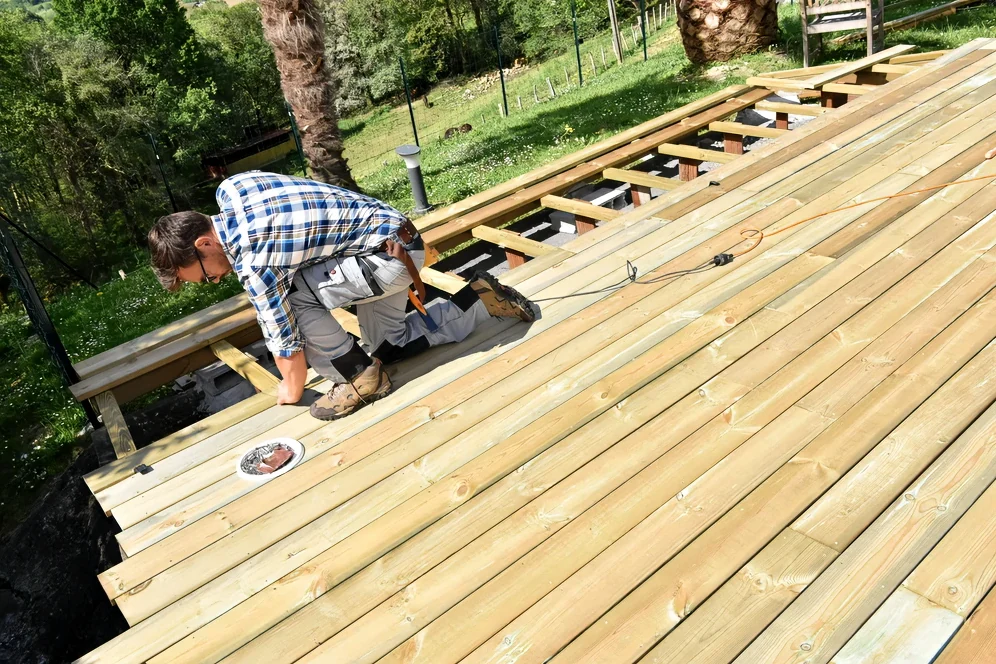
What is Deck Structural Reinforcement and how does it work?
Deck structural reinforcement means adding or replacing load-bearing parts like posts, beams, joists, and connections so the deck can safely support people, furniture, and weather without sagging or collapsing.
Think of your deck as a skeleton. Over time, wood rots, nails pull out, and the whole frame gets wobbly. Reinforcement is the fix that stiffens the skeleton. It's not about the surface boards or railings. It's about the hidden frame underneath that keeps everything from falling down.
In Birmingham, the heat and humidity speed up wood decay. A deck that looked fine five years ago might have soft spots in the joists where they meet the house. Reinforcement often starts with sistering new joists alongside old ones, replacing rotted sections, and adding metal connectors at every joint.
Most people don't realize that a deck's weakest point is where it attaches to the house. The ledger board, which bolts the deck to the house wall, is the most common failure point. Reinforcement means removing the old ledger, checking for rot in the siding and rim joist, then bolting a new one with proper flashing to keep water out.
Posts and footings are another big piece. A deck that sits on the ground or on shallow footings can shift with freeze-thaw cycles. In Birmingham, we don't get deep freezes, but heavy clay soil expands when wet and contracts when dry. Reinforcement here means digging new footings below the frost line and setting the posts on concrete piers with brackets.
The goal is simple: make the deck as strong as the day it was built, or stronger. That means using galvanized bolts instead of nails, adding diagonal bracing on posts, and making sure every connection can handle the load. It's not glamorous work, but it's what keeps a deck safe for a backyard barbecue.
How Deck Structural Reinforcement works, step by step
A structural reinforcement project starts with a full inspection, then moves to reinforcing or replacing the ledger, joists, beams, posts, and footings, and ends with new hardware and bracing.
First, the crew clears the deck of furniture and plants. They pull up a few deck boards to get a look at the frame underneath. They check for rot, rusted nails, and any signs of movement. They look at the ledger board from inside the house if there's a basement or crawlspace. They also check the posts for rot at ground level.
If the ledger board is bad, they unbolt it and take it off. They cut away any rotted house siding and replace the rim joist if needed. Then they install a new pressure-treated ledger with a layer of metal flashing that directs water away from the house wall. They use 1/2-inch galvanized lag bolts or through-bolts every 16 inches.
Next comes the joists. If a joist is rotted at the end, they cut off the bad section and bolt a new piece alongside it, called sistering. They use joist hangers at both ends and nail them with hot-dipped galvanized nails. They also add blocking between joists every 8 feet to keep them from twisting.
The beam, which is the big horizontal piece that the joists rest on, gets checked for sagging. If it's cracked or bowing, they either sister it with another beam or replace it entirely. They make sure the beam sits directly on top of the posts, not just nailed to the side. That's a common mistake in older decks.
Posts get reinforced with metal brackets at the top and bottom. If a post is rotted at the base, they cut off the bad part and set it on a concrete pier with a standoff bracket that keeps wood off the ground. They also add diagonal bracing from the posts to the beam, which stops the deck from swaying when people walk on it.
Finally, they go back and replace every missing or rusted joist hanger, nail, and bolt. They add hurricane ties where the joists meet the beam. They tighten every connection. Then they put the deck boards back and check for level. The whole process takes two to four days for a typical Birmingham deck.
Why Deck Structural Reinforcement matters for your home
Structural reinforcement keeps your deck from collapsing under the weight of people, furniture, and snow, and it prevents injury and expensive repairs down the road.
A deck that isn't reinforced can fail suddenly. The most common failure is the ledger board pulling away from the house, which causes the whole deck to tilt and drop. In Birmingham, we see this most often on decks built before 2000, when building codes were looser about fasteners and flashing.
Reinforcement also stops small problems from turning into big ones. A single rotted joist might not seem like a big deal, but when it breaks, the deck boards above it sag. Then water pools in that sag, rots more wood, and within a couple of years you're looking at replacing the whole frame instead of fixing one joist.
It matters for resale value, too. When you sell your house, the home inspector will check the deck. If they find a loose ledger, missing hangers, or rotted posts, the buyer will either walk away or demand a big price cut. A reinforced deck with a clean inspection report is a selling point.
Insurance companies are starting to pay attention. If a deck collapses and someone gets hurt, your homeowner's policy might not cover it if the deck was not built to code. Reinforcement brings the deck up to current code, which protects you from liability.
And honestly, it's about being able to use your deck without worry. If you're hosting a party and the deck feels bouncy, nobody enjoys it. Reinforcement makes the deck solid. You can put a grill, a table, and a dozen people on it and not think twice.
Common problems and what causes them
The most common problems are rotted ledger boards, corroded nails, missing joist hangers, undersized posts, and footings that have settled or cracked.
Rotted ledger boards are the number one issue we see. The original builder often nailed the ledger directly to the house without any flashing. Water gets trapped between the ledger and the siding, and over years it rots both the ledger and the house rim joist. In Birmingham's humid climate, this rot sets in fast.
Corroded nails and screws are another big problem. Many older decks used common nails that rust quickly. Once the nails rust, the connections loosen and the deck starts to wobble. Galvanized or stainless steel hardware lasts decades longer, but it costs more upfront and many builders skipped it.
Missing joist hangers are surprisingly common. On decks built in the 1990s, builders often just nailed the joists into the beam from the side. That puts all the weight on the nails, which can shear off. Joist hangers cradle the joist and transfer the load to the beam properly.
Undersized posts are a hidden issue. A deck that's 10 feet off the ground needs 6x6 posts, not 4x4s. We see 4x4s on two-story decks all the time. They can sag or snap under heavy loads. Reinforcement means replacing them with the right size.
Footings that have settled or cracked cause the deck to tilt. In Birmingham, clay soil expands and contracts with rain and drought. A footing that wasn't dug deep enough will move with the soil. The deck above it shifts, and the whole structure gets out of level. Fixing that means digging new footings and jacking the deck back up.
Common questions about Deck Structural Reinforcement
Need deck repair in Birmingham? Get a free estimate today.
📞 205-851-8373