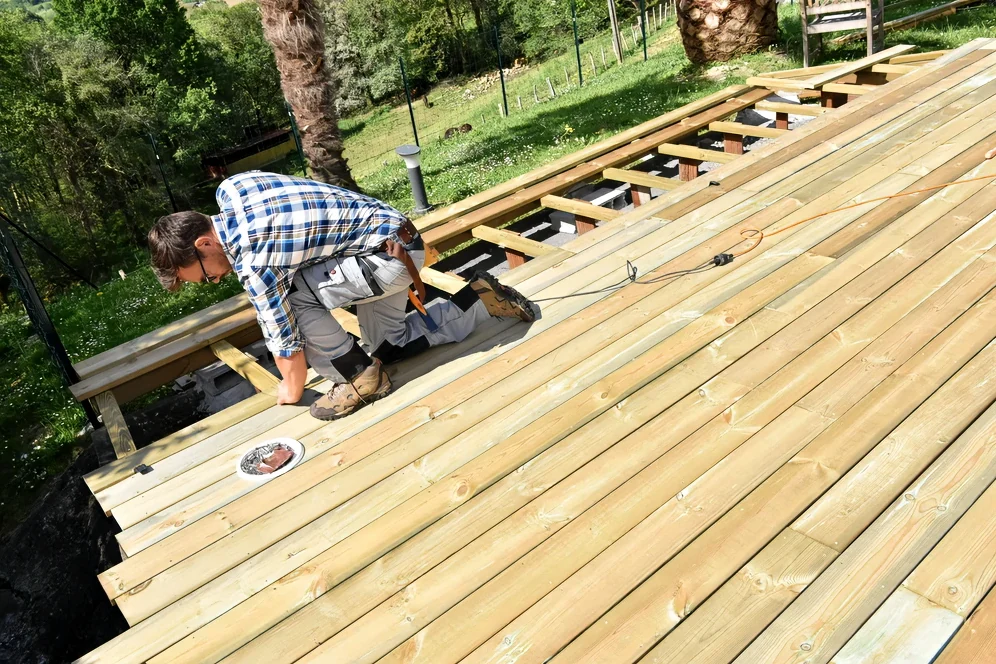
What is Deck Staining & Sealing and how does it work?
Deck staining and sealing is the process of applying a protective finish to your deck's wood to block moisture, UV rays, and foot traffic wear. In Birmingham's humid climate, it's the difference between a deck that lasts 15 years and one that rots in 5.
Think of stain as a coat of armor with color. Sealer is the clear raincoat on top, though many modern stains combine both in one product. The liquid soaks into the wood pores, then forms a barrier on the surface. Water beads up and runs off instead of soaking in and swelling the grain.
Birmingham's weather is the real reason this matters. We get heavy spring rains, humid summers, and freeze-thaw cycles in winter. Unsealed wood acts like a sponge. It swells, cracks, and then invites rot and insects. A proper stain-seal job stops that cycle cold.
There are two main types: oil-based and water-based. Oil-based soaks deeper and gives a richer look, but takes longer to dry and smells stronger. Water-based dries fast, cleans up with soap, and holds color better in direct sun. Both work well here if the prep is done right.
Most homeowners think you just brush it on and you're done. That's wrong. The prep work cleaning, sanding, and drying is 80 percent of the job. Skip that and the stain peels off in patches within a year. A good stain job on a well-prepped deck can last three to five years in Birmingham.
The finish you choose also affects how often you recoat. A semi-transparent stain shows the wood grain but fades faster. A solid stain acts more like paint and hides the wood, but lasts longer. There's no one right answer. It depends on your deck's age and how much sun it gets.
How Deck Staining & Sealing works, step by step
Staining and sealing a deck follows a strict sequence: clean the wood, let it dry completely, sand rough spots, apply stain with a brush or sprayer, let it cure, then add a second coat if needed. Each step has a purpose and skipping any one costs you later.
Step one is a deep clean with a deck brightener and a stiff brush. Pressure washers work too, but you have to keep the nozzle moving and stay at least 12 inches from the wood. Too close and you gouge the soft grain, which creates fuzzy spots that soak up stain unevenly. A lot of Birmingham homeowners make this mistake in early May when they're eager to get the deck ready for summer cookouts.
After cleaning, the wood needs to dry for at least 48 hours with no rain in the forecast. In our humidity, that can stretch to three or four days. You can test it by sprinkling a few drops of water on the deck. If the water beads up, it's not ready. If it soaks in within a minute, you're good to go. Rushing this step is the number one reason stain fails here.
Sanding comes next, but only on rough or splintered areas. You don't need to sand the whole deck if it's in decent shape. Use 80-grit paper on a pole sander and knock down any raised grain. This step is often skipped, but it makes the finish feel smooth under bare feet and helps the stain bond evenly.
Application is where the skill shows. A pump sprayer is fast, but you still have to back-brush every inch to work the stain into the grain. Rolling it on with a paint roller leaves puddles in low spots and misses the gaps between boards. A good pro uses a brush for the edges and a sprayer for the field, then back-brushes the whole thing. That takes time, but it's the only way to get uniform coverage.
One coat is rarely enough on new wood. The first coat soaks in and looks dull. A second coat, applied after the first dries to the touch (usually four to six hours), gives the deck its final color and protection. On older decks that have been stained before, one coat may be enough if the old finish is still in good shape. But if the wood is gray and thirsty, plan on two.
Curing is the final hidden step. Even after the stain feels dry to the touch, the chemicals need time to fully bond. That means no furniture, no foot traffic, and definitely no rain for at least 24 hours. In Birmingham's summer, an afternoon thunderstorm can ruin a fresh stain job if you don't watch the radar.
Why Deck Staining & Sealing matters for your home
Staining and sealing protects your deck from Birmingham's heat, rain, and humidity. Without it, the wood rots, warps, and becomes a safety hazard. A well-maintained deck adds real value to your home and keeps your outdoor space usable for years.
Wood is a natural material that wants to return to the ground. Sunlight breaks down the lignin that holds wood fibers together, turning the surface gray and brittle. Rain swells the fibers, then the sun dries them out again. That constant expansion and contraction causes cracks, splits, and cupping. Stain and sealer slow that cycle way down.
A deck that's properly sealed also resists mildew and algae. Birmingham's shade and humidity are perfect for green slime to grow on wood. That slime makes the deck slippery when wet, which is a real danger for kids and older adults. A good stain includes mildewcides that keep the surface clean and safe.
There's also the cost side. A new pressure-treated deck runs thousands of dollars. Replacing rotten boards or rebuilding a sagging structure costs even more. Spending a few hundred dollars every three to five years on stain and sealer is cheap insurance. It keeps the wood sound and delays the big replacement bill.
A stained deck looks better too. The warm, rich color makes your backyard feel like an extension of your home rather than a worn-out afterthought. When you're selling a house in Birmingham, a deck that's been maintained is a selling point. A gray, cracked deck makes buyers wonder what else has been neglected.
One thing most homeowners don't think about: the underside of the deck boards. Moisture wicks up from the ground and attacks the bottom of the wood first. A good stain job covers all six sides of each board, not just the top. That's why pros flip boards when they can and stain the edges and ends before installation.
Common problems and what causes them
Most deck staining problems come from poor prep, bad weather timing, or using the wrong product. Peeling, blotching, and fading are the three biggest complaints. Each has a specific cause and a fix, but prevention is way easier than repair.
Peeling happens when the stain can't bond to the wood. The most common reason is that the deck wasn't clean enough. Old stain, dirt, or mildew act like a release layer. The new stain sits on top instead of soaking in, and within a few months it flakes off like sunburned skin. The fix is stripping everything off and starting over, which is twice the work.
Blotchy color is usually a moisture problem. If the wood isn't fully dry, some areas absorb more stain than others. The result is dark patches next to light patches. This is especially common on decks that face north or are shaded by trees, because those areas stay damp longer. The only cure is to wait for a dry stretch and apply a second coat, but even that won't fully fix the unevenness.
Fading is normal over time, but it shouldn't happen in the first year. If your stain fades fast, it's likely a cheap product or a single coat on thirsty wood. UV rays break down the color pigments, and a thin film doesn't have enough pigment to hold up. Using a stain with UV blockers and applying two coats gives you the best shot at color that lasts.
Mildew spots show up as black or green dots on the surface. They happen when the stain doesn't have a mildewcide, or when the deck stays wet for days at a time. Birmingham's frequent afternoon showers in July and August create the perfect conditions. A quick scrub with a mildew cleaner and a rinse usually fixes it, but switching to a stain with a built-in mildewcide prevents the problem.
Cracking between boards is a structural issue, not a stain issue. But it gets blamed on the stain all the time. If the gaps between your deck boards are more than a quarter inch wide, water gets underneath and rots the joists. Stain can't fix that. You need to replace the boards or adjust the spacing. A good stain job will highlight this problem because the new finish makes the gaps more visible.
Common questions about Deck Staining & Sealing
Need deck repair in Birmingham? Get a free estimate today.
📞 205-851-8373