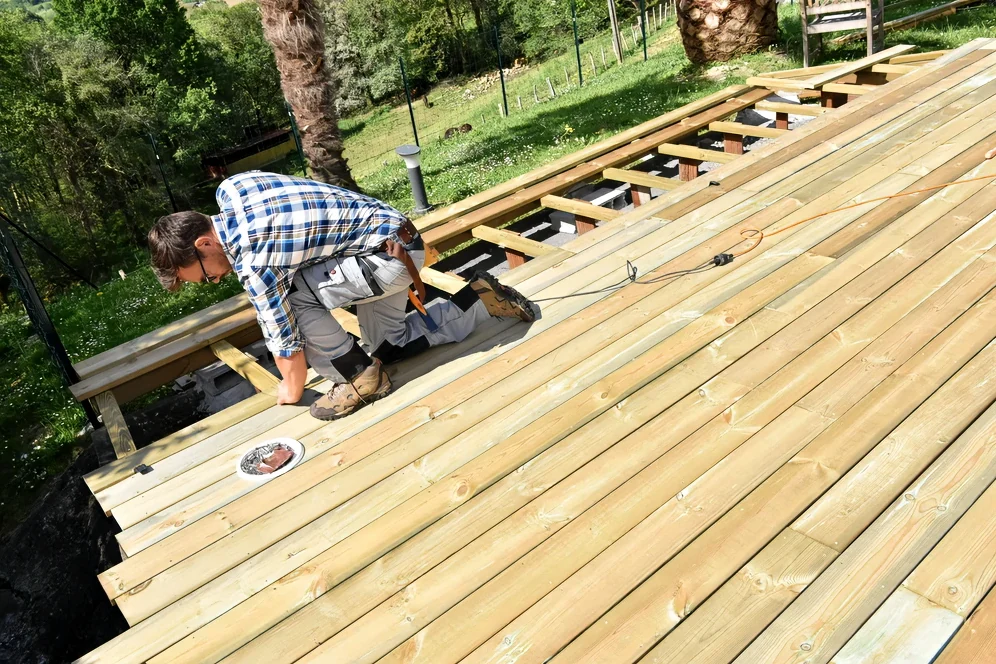
What is Deck Repair and how does it work?
Deck repair is the process of fixing damaged, rotten, or unsafe parts of your deck instead of tearing it all down and starting over. A pro inspects, identifies the root cause, then replaces or reinforces only what's needed.
Most Birmingham decks get hammered by humidity, heavy rain, and the occasional freeze-thaw cycle. That moisture works its way into cracks and around fastener heads. Over time, wood rots from the inside out. Deck repair stops that rot before it spreads to the joists or the ledger board against your house.
A good repair starts with a thorough inspection. I crawl under the deck, probe the ledger board with a screwdriver, check every post base for ground contact rot, and look at the stair stringers. In Birmingham, I always check the area around the grill and the fire pit. Grease and ash accelerate wood breakdown fast.
Once I know what's bad, I figure out what's good. Often a deck looks worse than it is. Surface splinters and grayed wood are cosmetic. But if a joist end is soft or a post is wobbly, that's structural. Repair means cutting out the rotted section and sistering in new pressure-treated lumber. For composite decks, it means replacing individual boards or sections.
The goal is to bring the deck back to safe, solid condition without replacing everything. On a typical 12x16 deck in the Birmingham area, a full repair might involve replacing 4 to 6 deck boards, one rim joist, and resetting two posts. That's a lot cheaper than a full rebuild.
I've seen homeowners patch a rotted board with wood filler and paint. That never lasts. The rot keeps spreading underneath. Real repair means removing the damaged wood, treating the surrounding area with a preservative, and installing new lumber that's properly flashed and fastened.
How Deck Repair works, step by step
A professional deck repair follows a clear sequence: inspection, stabilization, removal, replacement, and finishing. Each step is done to prevent further damage and ensure the repair lasts.
Step one is the inspection. I bring a flathead screwdriver, a level, and a flashlight. I poke at every post base, ledger board, and joist end. I look for soft spots, discoloration, and fungal growth. In Birmingham, I pay extra attention to the side of the deck that faces north. That side gets less sun and stays damp longer.
Step two is stabilization. If I find a section of deck that's about to collapse, I put temporary supports under it before pulling anything apart. This is not a DIY step. A deck that's sagging can fall without warning. I've seen a loaded grill drop through a rotted section. That's a real fire hazard.
Step three is removal. I pull the bad deck boards, cut out rotted joist sections, and dig out any posts that have rotted at ground level. I use a Sawzall with a demo blade for the joists and a reciprocating saw for the posts. The old hardware gets tossed. I never reuse screws or nails that have been in contact with rot.
Step four is replacement. I sister new joists alongside the old ones, using galvanized hangers and screws. For deck boards, I use 5/4 x 6 pressure-treated pine or cedar, depending on what the homeowner wants. I pre-drill the ends to prevent splitting, and I leave a 1/8 inch gap for drainage. In Birmingham, I also add a layer of joist tape over the tops of the joists before laying the new boards. That tape stops moisture from sitting on the joist and starting the rot cycle again.
Step five is finishing. I sand any rough edges, apply a water-repellent sealer to the new wood, and replace any missing or damaged railing balusters. If the deck is composite, I use color-matched PVC trim to cover the ends. I also check the stair treads and replace any that are loose or cracked.
The whole process for a typical repair takes one to two days. A full deck replacement takes three to five. The difference is in how much of the substructure is salvageable. On a deck that's been neglected for years, the joists and posts are often too far gone. In that case, repair becomes a full rebuild.
- Inspection with a screwdriver and level
- Temporary supports for sagging sections
- Removal of rotted wood and old fasteners
- Sistering new joists with galvanized hangers
- Joist tape on top of joists before deck boards
- Pre-drilling deck board ends to prevent splits
- Applying water-repellent sealer to new wood
Why Deck Repair matters for your home
Deck repair keeps your deck safe, extends its life, and prevents damage from spreading to your house. A rotting ledger board can let water into your wall framing and cause thousands in interior repairs.
The ledger board is the board bolted to your house that supports the deck. In Birmingham, I've pulled off ledgers that were completely soft behind the siding. The deck was still standing, but the house framing behind it was wet and starting to rot. That's a repair that could have been a simple ledger replacement if caught early. Instead, it turned into a siding and sheathing job too.
A deck that's not repaired also becomes a liability. Loose railings, wobbly stairs, and rotting posts are trip and fall hazards. Birmingham has a lot of older homes with decks that were built in the 90s or early 2000s, before the current building codes. Those decks often have nails instead of screws, no joist hangers, and posts sitting directly on dirt. Repairing those decks brings them up to current safety standards.
Repair also saves money. Replacing a few joists and a dozen deck boards costs a fraction of a full tear-off and rebuild. On a 12x16 deck, a full rebuild runs thousands of dollars. A targeted repair might be a few hundred to a couple thousand, depending on the extent of the damage.
A well-maintained deck adds value to your home when you sell. A buyer's home inspector will flag a rotted deck. That gives the buyer use to ask for a credit or a price reduction. Getting the repair done before listing puts you in control.
There's also the simple pleasure of using your deck. A deck that's solid and safe is a place to grill, sit with coffee, or watch the kids play. A deck that's falling apart is a source of stress. Repair turns it back into an asset.
Common problems and what causes them
The most common deck problems in Birmingham are rot at ground contact points, ledger board failure, loose railings, and warped deck boards. Each has a specific cause and a straightforward fix.
Rot at ground contact points is the number one issue I see. Posts that sit directly on concrete or dirt wick moisture up into the wood. In Birmingham's clay soil, water pools around the post base and never drains. The wood stays wet for months. I've pulled posts that were completely hollow six inches above the ground. The fix is to set the posts on concrete piers that rise at least six inches above grade, with a metal post base that keeps the wood off the concrete.
Ledger board failure is the second most common. The ledger is supposed to be bolted to the house with lag screws or through-bolts, with a metal flashing that directs water away. On older decks, I find the ledger nailed on with no flashing. Water runs down the siding, gets behind the ledger, and rots it from the back. The fix is to remove the old ledger, replace it with a pressure-treated one, install proper Z-flashing, and bolt it with 1/2 inch lag screws into the rim joist.
Loose railings happen when the balusters are nailed instead of screwed, or when the post bases are not anchored. A kid leaning on a loose railing can fall through. The fix is to replace the nails with 3-inch deck screws and add post anchors bolted to the deck frame. For glass or cable railings, the tension needs to be adjusted regularly.
Warped deck boards come from using green lumber that wasn't kiln-dried, or from poor ventilation under the deck. In Birmingham's humidity, boards cup and twist as they dry. The fix is to replace individual boards with kiln-dried stock and to make sure there's at least 18 inches of clearance under the deck for airflow.
I also see fastener pop-up. Nails work loose over time and stick up, creating a trip hazard. The fix is to pull the nails and replace them with coated deck screws. Screws hold better and don't pop up.
One more issue is stair tread separation. The treads are often only nailed at the ends. Over time, the nails pull out and the tread rocks. The fix is to screw the treads from underneath into the stringers, using 2-1/2 inch screws.
- Rot at post bases from ground contact
- Ledger board rot from missing flashing
- Loose railings from nails instead of screws
- Warped deck boards from green lumber
- Fastener pop-up from nails working loose
- Stair tread separation from end nailing
Common questions about Deck Repair
Here are the questions Birmingham homeowners ask most often about deck repair, with straight answers.
How long does a deck repair last? A good repair using pressure-treated lumber and proper fasteners should last 10 to 15 years before you need to address individual boards again. The key is keeping the wood sealed and the joints dry.
Can I repair just one rotted board? Yes, if the rot is limited to that board and hasn't spread to the joists underneath. But I always check the joist beneath a rotted board. Often the rot goes deeper than it looks.
Do I need a permit for deck repair in Birmingham? Minor repairs like replacing a few boards usually don't require a permit. But if you're replacing the ledger board, adding new posts, or changing the structure, Birmingham building code requires a permit. I pull permits for any repair that involves structural work.
How do I know if my deck is safe? Walk on it and feel for bounce. Check the railings for wobble. Look at the posts for rot at the base. If you see mushrooms growing on the wood, that's a sign of advanced rot. If you're unsure, call a contractor for an inspection.
What's the difference between deck repair and deck refinishing? Repair fixes structural damage. Refinishing is cleaning, sanding, and applying a new stain or sealer. Refinishing does nothing for rot or loose connections. You might need both, but they are separate jobs.
Can I stain over repaired boards? Yes, but you need to wait at least 30 days for pressure-treated wood to dry, then apply a stain that matches the existing color. I recommend using a semi-transparent stain so the wood grain shows and you can see any future issues.
How much does deck repair cost in Birmingham? Costs vary widely based on the size of the deck and the extent of damage. A typical repair on a 12x16 deck runs from a few hundred dollars for a few boards to a couple thousand for multiple joists and posts. The only way to get an exact figure is a free on-site quote.
Should I replace my deck or repair it? If more than 30 percent of the deck is rotted or damaged, replacement is usually more cost effective. If the damage is localized to a few boards or joists, repair makes sense. I give homeowners the option after the inspection.
Can I power wash my deck before repair? No. Power washing forces water into the wood and can worsen rot. If the deck needs cleaning, I use a deck cleaner and a stiff brush, then let it dry completely before any repair work.
How do I prevent future deck rot? Keep the deck clean and sealed. Trim back vegetation that touches the wood. Make sure gutters don't dump water onto the deck. And every spring, check the ledger board and post bases for moisture.
Frequently Asked Questions
How long does a deck repair last?
A good repair using pressure-treated lumber and proper fasteners should last 10 to 15 years before you need to address individual boards again. The key is keeping the wood sealed and the joints dry.
Can I repair just one rotted board?
Yes, if the rot is limited to that board and hasn't spread to the joists underneath. But I always check the joist beneath a rotted board. Often the rot goes deeper than it looks.
Do I need a permit for deck repair in Birmingham?
Minor repairs like replacing a few boards usually don't require a permit. But if you're replacing the ledger board, adding new posts, or changing the structure, Birmingham building code requires a permit. I pull permits for any repair that involves structural work.
How do I know if my deck is safe?
Walk on it and feel for bounce. Check the railings for wobble. Look at the posts for rot at the base. If you see mushrooms growing on the wood, that's a sign of advanced rot. If you're unsure, call a contractor for an inspection.
What's the difference between deck repair and deck refinishing?
Repair fixes structural damage. Refinishing is cleaning, sanding, and applying a new stain or sealer. Refinishing does nothing for rot or loose connections. You might need both, but they are separate jobs.
Can I stain over repaired boards?
Yes, but you need to wait at least 30 days for pressure-treated wood to dry, then apply a stain that matches the existing color. I recommend using a semi-transparent stain so the wood grain shows and you can see any future issues.
How much does deck repair cost in Birmingham?
Costs vary widely based on the size of the deck and the extent of damage. A typical repair on a 12x16 deck runs from a few hundred dollars for a few boards to a couple thousand for multiple joists and posts. The only way to get an exact figure is a free on-site quote.
Should I replace my deck or repair it?
If more than 30 percent of the deck is rotted or damaged, replacement is usually more cost effective. If the damage is localized to a few boards or joists, repair makes sense. I give homeowners the option after the inspection.
Can I power wash my deck before repair?
No. Power washing forces water into the wood and can worsen rot. If the deck needs cleaning, I use a deck cleaner and a stiff brush, then let it dry completely before any repair work.
How do I prevent future deck rot?
Keep the deck clean and sealed. Trim back vegetation that touches the wood. Make sure gutters don't dump water onto the deck. And every spring, check the ledger board and post bases for moisture.
Need deck repair in Birmingham? Get a free estimate today.
📞 205-851-8373